
Thank you for choosing sapio365 as your go-to Microsoft 365 management tool.
This documentation helps you use sapio365 to achieve your goals, including the steps required to get everything up and running.
This documentation is not exhaustive and is updated continuously. If you do not find what you need or have any questions, please contact our support team.
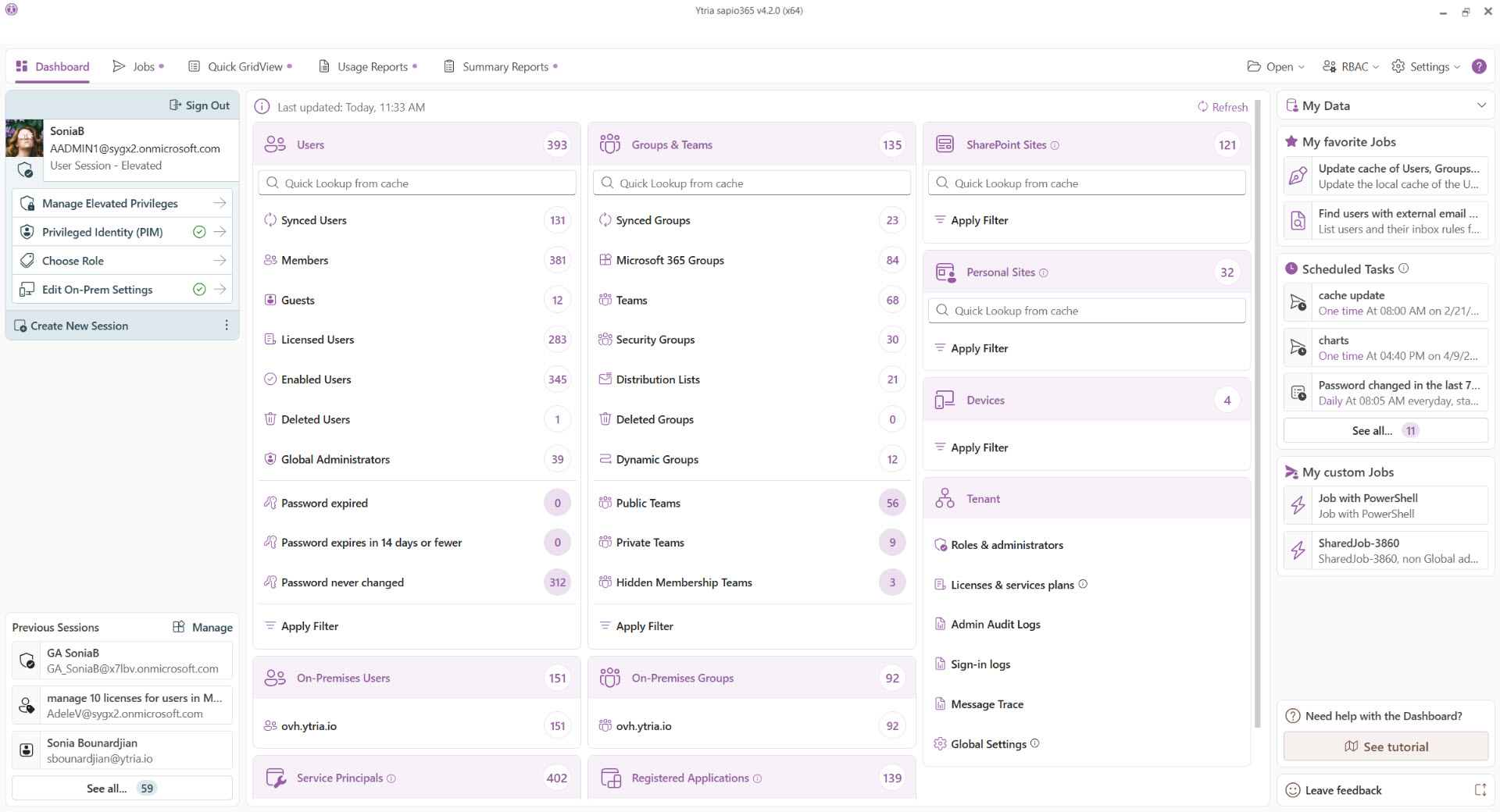
Understanding how sapio365 works
After installing sapio365, we recommend reviewing the following four sections to understand the main concepts you need to get started.
Explore your tenant
Click on the topics below to explore features specific to each.
|
Topic |
Description |
|---|---|
|
Use this section to learn how to load, edit, and manage users in sapio365, including their memberships, licenses, files, mailboxes, and on-prem group memberships (for hybrid tenants). |
|
|
In this section, you’ll see how to load, edit, and manage groups and Teams in sapio365, including their properties, members, content, on-prem memberships (for hybrid tenants), and tenant-wide settings such as expiration policies. |
|
|
This section describes how to work with SharePoint Online sites, subsites, lists, items, columns, and document library files in sapio365, including loading properties and navigating site content. |
|
|
Here, you can find how to manage documents and files in sapio365 across OneDrive, sites, and groups, including editing, organizing, checking out, and controlling how they are shared. |
|
|
On this page, you learn how to build, schedule, and export consolidated Microsoft 365 usage reports in sapio365 so you can analyze user and group activity in a single, customizable view. |
|
|
Use this page to view and manage Microsoft 365 admin roles in sapio365, including assigning and removing roles, reviewing role holders’ details, and running role-related reports. |
|
|
Here you’ll find a summary of your Microsoft 365 licenses and service plans in sapio365, and how to review consumption and set license unit costs to use that data in cost reports across other views. |
|
|
Here you can see how to run and filter the admin audit logs report in sapio365 so you can retrieve, sort, and arrange audit events for custom reporting. |
|
|
The Sign-in Logs section shows how to run and filter sign-in logs in sapio365 so you can review sign-in activity, switch between risk and status views, and build custom last sign-in reports for users and applications. |
|
|
Message Trace lets you list messages, review delivery status such as delivered, failed, quarantined, and filtered as spam, and analyze the results directly in the grid. |
|
|
Global settings for your tenant are covered here, including user passwords, group and Teams settings, application and consent policies, and other directory-wide controls you can manage from the tenant dashboard. |
|
|
This section lets you list and manage service principals in sapio365, review their properties and permissions, update them in bulk, and see their associated registered applications. |
|
|
This page details how to review, edit, and delete registered applications in your Azure Active Directory using sapio365, including key settings such as URLs, certificates, secrets, permissions, and roles. |
More